Our sensor
Nature shows us the way, the sensor shows us the progress - a symbiosis that follows the growth of spirulina in the tank in harmony with the principles of technology.
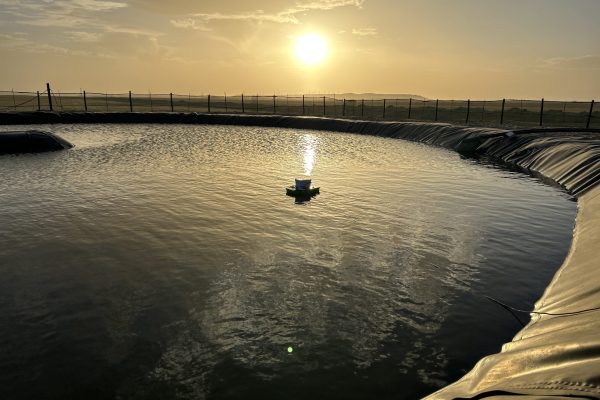
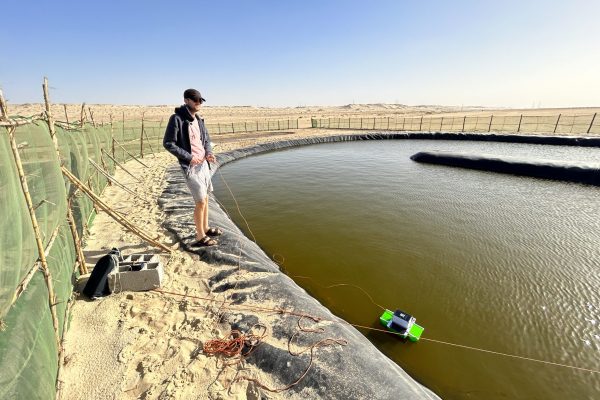
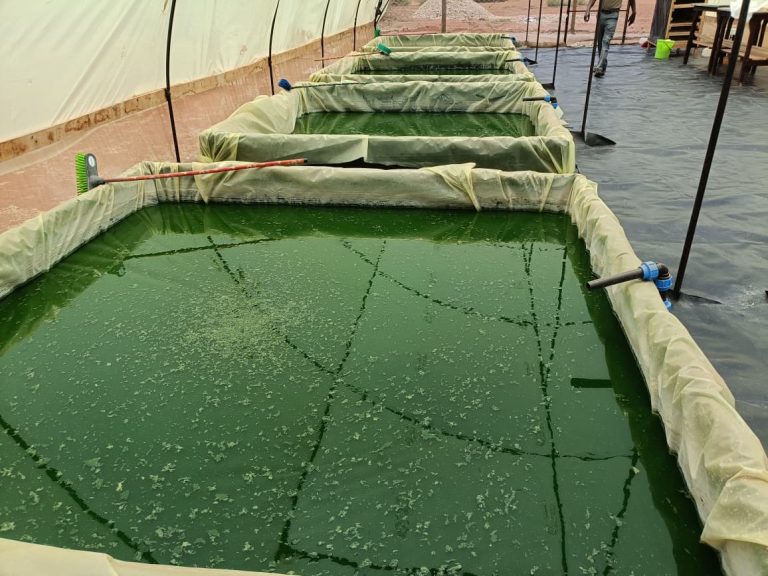
Our technical team has developed a sensor to facilitate the cultivation of spirulina and other (micro)organisms. Its task is to monitor various water parameters in the breeding tanks and thus provide helpful information for the harvesting and cultivation process.
The following parameters are measured:
Water temperature
Every (micro)organism, including spirulina, has a growth optimum, i.e. a temperature at which it grows best. In our system, the temperature sensor is installed in the OD sensor ("optical density").
Concentration of (micro)organisms in the pool
Absorption measurements with the OD sensor can be used to determine the concentration of (micro)organisms in the tank and thus the ideal harvesting time. Spirulina, for example, multiplies exponentially until a certain density is reached and growth reaches a plateau phase. The best time to harvest is just before the end of the exponential phase, so that it never comes to a standstill. This point in time can be determined by means of absorption measurement. It is also important to prevent overpopulation so that there are enough nutrients for everyone.
Impurities
Changes in absorption behavior can also be detected using the OD sensors and indicate impurities in the breeding tanks. The sensor helps to detect them at an early stage and then combat them. Three components are required in the sensor to measure the optical density: A light source, a light detector and a temperature sensor for temperature compensation of the detector.
Dissolved oxygen
The amount of oxygen in the breeding tanks is another parameter for monitoring growth. Spirulina, for example, produces oxygen. A lack of oxygen in the tank is therefore an indication of inhibited/stopped growth. The dissolved oxygen is measured with the DO electrode ("Dissolved Oxygen").
Conductivity
We can check the salt content in the pools using conductivity measurements with the EC electrode ("Electrical Conductivity"). Spirulina, as well as other (micro)organisms, have a preferred environment in which to grow. The appropriate environment is created and constantly monitored by adding fertilizers.
pH value
Salts are not only relevant nutrients for the (micro)organisms, but also change the pH value of the water. This is also crucial for growth. Some (micro)organisms such as Spriulina prefer an alkaline environment (pH value 9-11), whereas others grow in an acidic environment (pH value <7). The pH value is measured with the pH electrode.
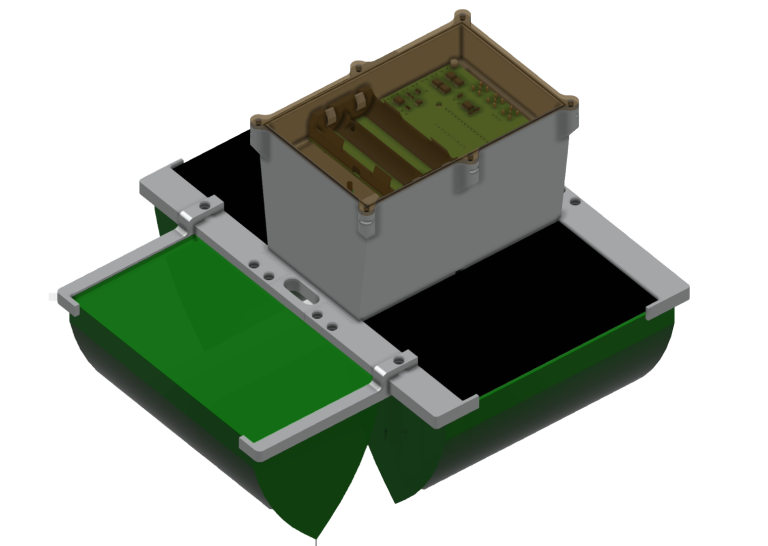
Electronics
Solar panel
Solar panel
Floating body
Floating body
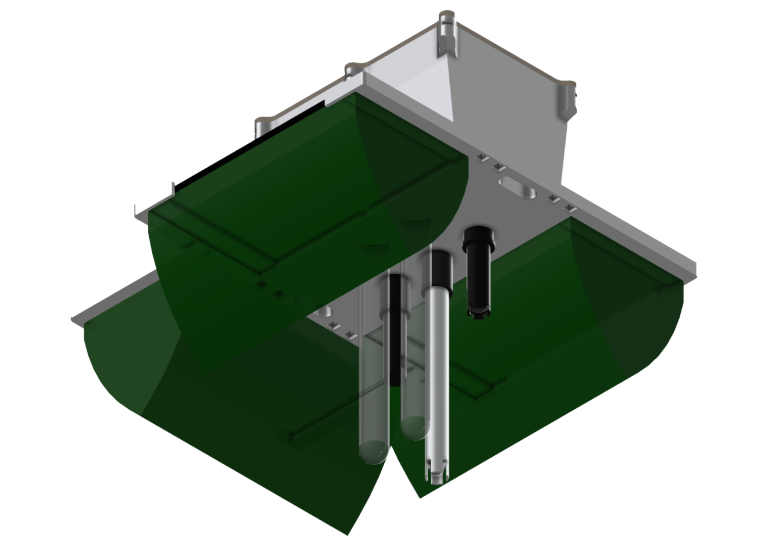
EC electrode
DO Electrode
pH electrode
OD Sensor
OD Sensor
The technology
The sensor weighs around 500g and is powered by lithium batteries that are recharged via solar panels. This innovative power supply ensures a continuous energy supply. Our sensor is an IoT (“Internet of Things”) multi-sensor platform. This enables us to exchange data between the sensor and our servers, provided WLAN is available.
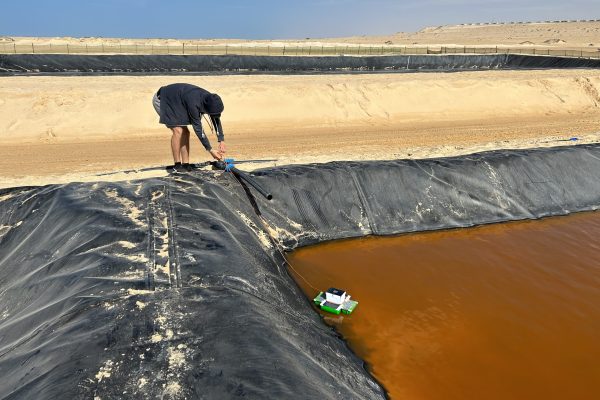
In January 2023, we were guests of our partner Viride in Western Sahara. There we tested the sensor for the first time in an algae tank for a longer period of time! You can find out more in the corresponding blog article.
Our technical team is motivated to constantly develop the sensor further.
If you would like to find out more (technical) details about our sensor, please contact our technical team!
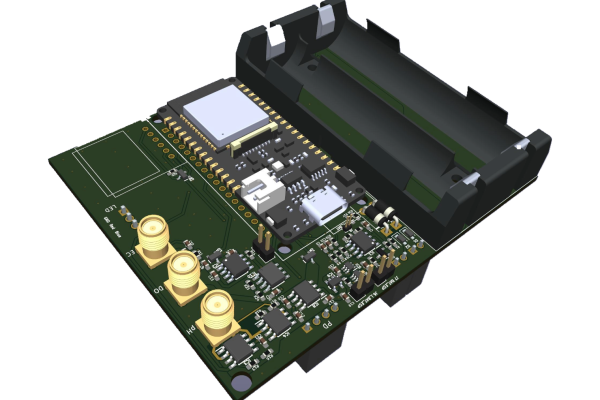
Battery holder
µController & WiFi module
OD sensors connection
EC sensor connection
pH sensor connection
DO sensor connection